
A Pearson Alum Sets Her Sights Beyond Our Solar System
Gazing up from the apex of the Pearson campus into the vast night sky, Ha Do wasn’t thinking about unlocking the mysteries of the universe. The Year 46 (2021) grad was just trying to get through the last few weeks of school.
“Even though this is usually a very stressful time, I remember it as actually being a very tranquil and joyful experience,” said Do. “Using the observatory to study for IB exams and talking for hours with my close friends.”
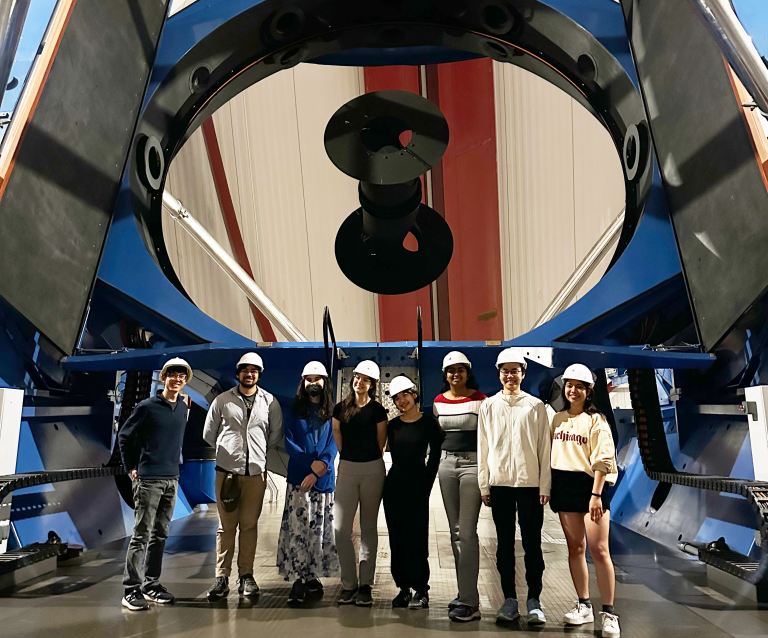
Ha Do (4th from right) with her University of Chicago astrophysics team
Fast forward five years and the passion that was cultivated at the Pearson observatory has led to an extraordinary find. While on a trip to a Chilean observatory, finishing up her astrophysics studies with the University of Chicago, Do and her team identified the most chemically pristine star ever discovered.
“It was super cool!” exclaimed Do. “We had no idea we would find such an interesting star. When we did the preliminary analysis and began to realise how extreme an object it was, the energy in the control room was quite thrilling.”
The star dates back to the early ages of the universe and helps piece together how the first massive stars transitioned into the smaller ones that are more common today. At 80,000 light years away, it’s a virtual cosmic neighbour, and relatively speaking, may feel closer than Ha Do once did to Pearson and the path that eventually led her to the celestial discovery.
“I was living in Nha Trang in central Vietnam which I enjoyed but didn’t really have material access to the opportunities that I did at Pearson,” explained Do. “I actually got rejected by my national committee the first time I applied, and when I did get accepted there were many challenges with such a diverse social environment, and leaving home as a teenager with no easy way for my family to visit or to directly provide support.”
Comfort came in that rich night sky she couldn’t quite access within the lights of her home city and from the person who helped her truly unlock the passion.
“My physics teacher, Mark Wheen, was a mentor to me in developing a real love for astrophysics and in many other respects—I really do credit him for making this journey even imaginable for me in the first place,” said Do.
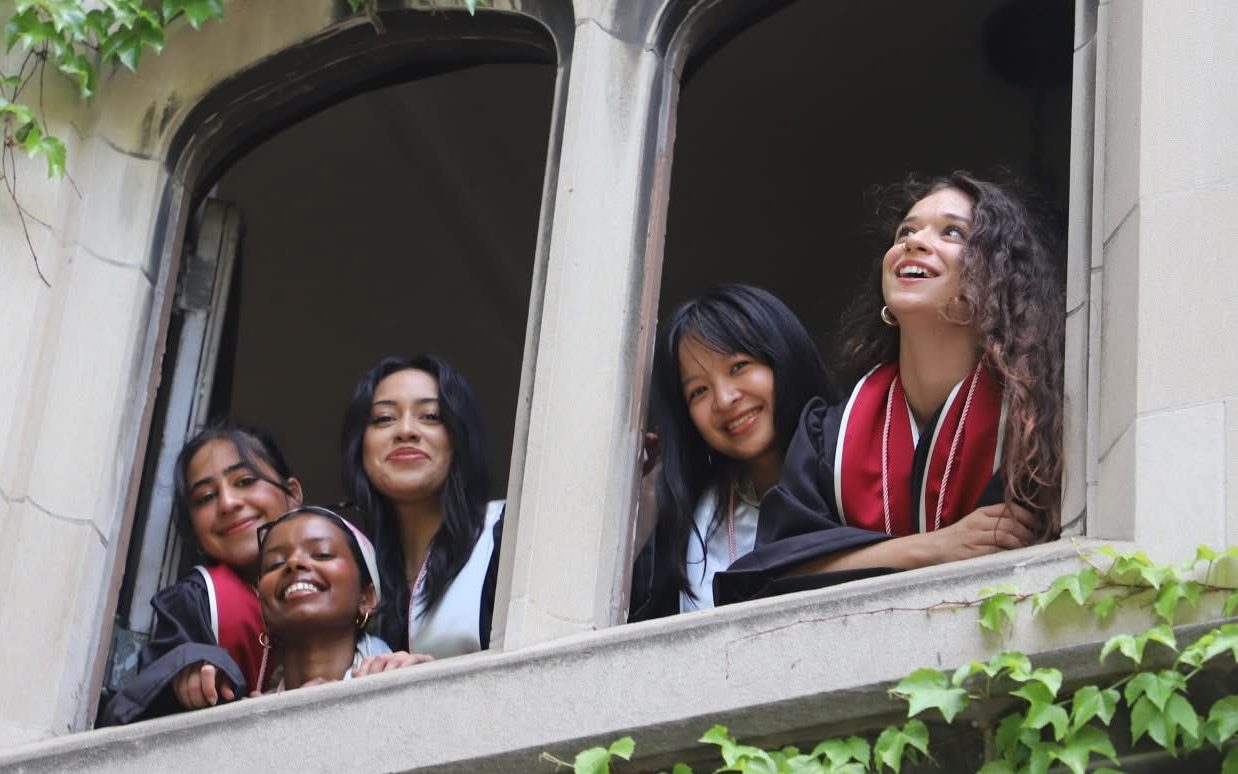
Ha Do (2nd from right) with University of Chicago classmates
SDSS J0915-7334, the official name of the Red Giant studied by Do and her colleagues, has been described as a ‘galactic immigrant’. Born in a cosmic cloud outside of our galaxy it has since taken up residence in the Milky Way, pulled by gravity along an unpredictable route.
“I sometimes wonder what I would be doing now if I hadn’t gone to a UWC school—I’m almost certain it wouldn’t have been astrophysics,” Do proclaimed” There were challenging times, but I made some of my best friends at Pearson who have been very formative to my growth and who are still very dear to me.”
Do is following her heart and the stars having already charted her next path in the astrophysics field as a PhD student at Johns Hopkins University where she will start this fall.
You can read more about Ha Do’s star discovery here – UChicago News article